
Roof work can be dangerous if proper safety measures are not followed. This article discusses essential tips for ensuring both safety and quality while working on roofs. By understanding safety regulations, wearing the right gear, and preparing for emergencies, workers can create a safer environment. Here are some key takeaways to keep in mind for effective roof work.
Key Takeaways
- Always conduct a pre-work safety talk to discuss hazards and confirm safety measures.
- Use proper personal protective equipment (PPE) like helmets and harnesses to prevent injuries.
- Establish secure work zones with clear signage to keep everyone safe.
- Monitor weather conditions and adapt work plans accordingly to avoid risky situations.
- Encourage a culture of safety where workers feel comfortable reporting hazards and participating in safety training.
Understanding Roof Work Safety Regulations
When it comes to roofing, safety regulations are crucial to protect workers from potential hazards. Understanding these regulations helps ensure that everyone on the job site is safe and compliant with the law.
OSHA Guidelines for Roof Work
The Occupational Safety and Health Administration (OSHA) has specific guidelines for roofing work. These include:
- Fall protection: Workers must use safety harnesses when working over 6 feet high.
- Ladder safety: Ladders should be stable and properly secured.
- Personal protective equipment (PPE): Essential gear like helmets and non-slip shoes must be worn.
Importance of Compliance in Roof Work
Compliance with safety regulations is not just about following the law; it’s about protecting lives. Here are some key points:
- Reduces the risk of accidents and injuries.
- Enhances the overall quality of work.
- Builds a culture of safety within the team.
Regular Safety Audits and Training
Conducting regular safety audits and training sessions is vital. This ensures that:
- Workers are aware of the latest safety practices.
- Any potential hazards are identified and addressed promptly.
- A culture of safety is maintained on the job site.
Regular training and audits can significantly reduce accidents and improve the quality of roofing work.
By adhering to these regulations, roofing companies can ensure that their projects are not only compliant but also safe and high-quality, making them a dependable choice for transforming living spaces in areas like Arlington, Virginia, and Washington D.C.
Choosing the Right Personal Protective Equipment (PPE)
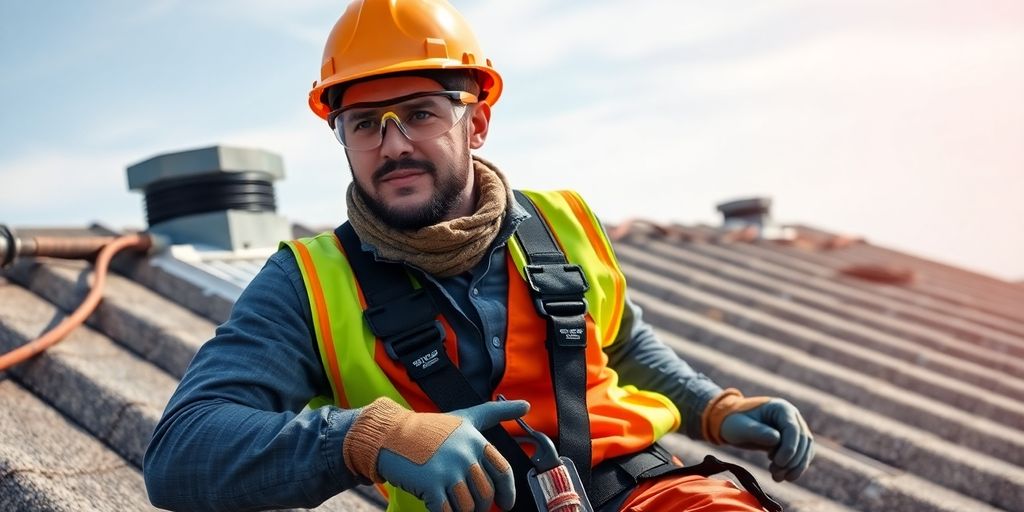
When it comes to roof work, selecting the right Personal Protective Equipment (PPE) is crucial for safety. PPE acts as your first line of defense against various hazards like falls, cuts, and slips. Here are some essential types of PPE that every roofer should have:
Essential PPE for Roof Work
- Safety Helmets: Protects against head injuries from falls or falling objects.
- Eye Protection: Safety glasses or goggles shield your eyes from harmful materials and debris.
- Work Gloves: Durable gloves prevent cuts and abrasions while handling materials.
- Fall Protection Gear: Includes harnesses and lanyards to prevent falls from heights.
- Footwear: Slip-resistant boots help navigate uneven and slippery surfaces.
Maintaining and Inspecting PPE
Regular maintenance of PPE is vital to ensure its effectiveness. Here are some tips:
- Inspect gear before each use for signs of wear or damage.
- Clean equipment regularly to maintain its condition.
- Replace any damaged items immediately to avoid risks.
Training Workers on PPE Usage
Training is essential for ensuring that all workers know how to use PPE correctly. This includes:
- Demonstrating proper fitting and adjustment of gear.
- Conducting regular training sessions on the importance of PPE.
- Encouraging workers to report any issues with their equipment.
By prioritizing the right PPE and proper training, you can significantly reduce the risks associated with roofing work. Remember, safety is everyone’s responsibility!
Establishing Secure Work Zones
Creating secure work zones is crucial for maintaining safety during roof work. This practice helps protect both workers and bystanders. Properly marked areas prevent unauthorized access and clearly define where work is taking place.
Setting Up Barricades and Signage
- Use strong barricades like cones, safety tape, or temporary fencing to mark the work area.
- Ensure that all signage is clear and visible, warning of roofing work ahead.
- Regularly check that barricades remain intact and visible throughout the project.
Managing Foot Traffic on Roofs
- Designate specific paths for workers to minimize the risk of accidents.
- Keep the work area organized to avoid clutter and potential hazards.
- Train workers to be aware of their surroundings and to communicate effectively about foot traffic.
Organizing Equipment and Materials
- Store tools and materials in designated areas to prevent trips and falls.
- Ensure that all equipment is inspected regularly and maintained in good condition.
- Use weather-resistant materials to protect against environmental factors that could compromise safety.
By establishing secure work zones, roofing contractors can significantly reduce the likelihood of on-site injuries and enhance overall safety. This is not just about compliance; it’s about fostering a culture of safety and responsibility on the roofing site.
In summary, creating secure work zones involves clear signage, effective management of foot traffic, and organized storage of equipment. This approach not only ensures compliance with safety regulations but also promotes a safer working environment for everyone involved. Remember, safety is a shared responsibility, and taking these steps can lead to a more efficient and secure roofing project. Safety first!
Effective Communication and Emergency Preparedness
Using Technology for Real-Time Updates
In today’s fast-paced work environment, technology plays a crucial role in ensuring safety. Utilizing real-time messaging apps and specialized roofing software can help teams stay connected. This ensures that everyone is informed about any changes or emergencies immediately.
Developing an Emergency Action Plan
Every roofing project should have a clear Emergency Action Plan (EAP). This plan must include:
- Emergency contact numbers
- Designated meeting points
- Procedures for evacuating the site
Workers should be trained on the EAP so they know what to do in case of an emergency. It’s essential that everyone understands the site’s address to relay it to emergency services if needed.
Conducting Regular Safety Drills
Regular safety drills are vital for preparing workers for emergencies. These drills should cover:
- Fire evacuations
- Severe weather responses
- First-aid procedures
By practicing these scenarios, workers will feel more confident and ready to act when real emergencies occur.
Effective communication and preparedness can save lives. Establishing clear channels and regular training ensures that everyone knows their role in an emergency.
In summary, prioritizing communication and emergency preparedness is essential for maintaining a safe roofing environment. By implementing these strategies, teams can work more effectively and respond swiftly to any situation that arises.
Summary Table of Key Points
| Key Area | Action Required |
|---|---|
| Technology for Updates | Use real-time messaging apps |
| Emergency Action Plan (EAP) | Develop and train workers on it |
| Safety Drills | Conduct regular practice sessions |
Weather Considerations in Roof Work
Monitoring Weather Conditions
Before starting any roofing project, it’s crucial to check the weather forecast. Weather can change quickly, and being prepared can help prevent accidents. Here are some key points to consider:
- Always check the forecast at the beginning of the day.
- Be aware of sudden changes in weather, like rain or strong winds.
- Have a plan in place for postponing work if conditions become unsafe.
Adapting Work Plans for Weather Changes
When working on roofs, it’s important to adjust your plans based on the weather. Here are some tips:
- Delay work during heavy rain or storms.
- Use weather-resistant materials to ensure durability.
- Ensure all workers are aware of the weather conditions and any changes to the plan.
Using Weather-Resistant Materials
Choosing the right materials can make a big difference in how well a roof holds up against the elements. Some materials to consider include:
- Asphalt shingles, which provide good traction and durability.
- Metal roofing, known for its resistance to wind and rain.
- Membrane roofing, which is effective in preventing leaks during heavy rain.
Remember: Safety should always come first. If the weather looks bad, it’s better to wait than to risk injury.
In summary, understanding and preparing for weather conditions is essential for safe and effective roof work. By monitoring the forecast, adapting plans, and using the right materials, you can help ensure a successful project while keeping everyone safe. This is especially important for those involved in remodeling services, where quality and safety are paramount.
Conducting Pre-Work Inspections and Hazard Assessments
Identifying Potential Roof Hazards
Before starting any roof work, it’s crucial to identify potential hazards. This includes checking for:
- Loose materials or debris
- Structural issues with the roof
- Weather-related risks like rain or wind
Assessing Structural Integrity
A thorough inspection of the roof’s structure is essential. Look for signs of wear and tear, especially in older roofs. Ensure that:
- All access points are secure
- Guardrails are properly installed
- The roof can support the weight of workers and equipment
Documenting Inspection Findings
Keeping a record of your inspections is important. This documentation helps in:
- Tracking safety improvements over time
- Informing future safety training
- Ensuring compliance with safety regulations
Regular inspections can significantly reduce the risk of accidents on the job site.
By following these steps, you can create a safer working environment for everyone involved in roof work. Remember, safety is a shared responsibility!
Promoting a Culture of Safety
Creating a safety culture in roofing is essential for protecting everyone involved. It starts with strong leadership commitment that emphasizes the importance of safety. Here are some key points to consider:
Leadership and Safety Commitment
- Management should lead by example, following all safety procedures.
- Regular safety training sessions should be held to keep everyone informed.
- Encourage open discussions about safety concerns among all team members.
Encouraging Safety Reporting
- Develop a positive reporting process for safety issues.
- Offer rewards for employees who report hazards or unsafe practices.
- Make sure workers feel comfortable speaking up without fear of punishment.
Continuous Safety Education and Training
- Safety training should not be a one-time event; it should be ongoing.
- Use real-life scenarios in training to prepare workers for emergencies.
- Regularly update training materials to reflect the latest safety standards.
A culture of safety is not just about following rules; it’s about making safety a shared responsibility.
By focusing on these areas, roofing contractors can foster a safer work environment, leading to fewer accidents and a more efficient workplace. Remember, safety is a continuous journey, not a destination!
Creating a safe environment is essential for everyone. At Ruach Home Services, we believe that safety should always come first. We encourage you to take action today by visiting our website to learn more about how we can help you maintain a secure and healthy home. Don’t wait—let’s work together to promote safety!
Conclusion
In conclusion, ensuring safety and quality in roof work is crucial for both workers and the overall success of roofing projects. By following the essential tips outlined in this article, such as conducting pre-work talks, using proper safety gear, and maintaining clear communication, roofing teams can significantly reduce the risk of accidents. Always remember to check the weather and keep work areas clean to prevent slips and falls. Safety should be a priority, not just a checklist. When everyone on the team is committed to these practices, it leads to a safer work environment and better quality results.
Frequently Asked Questions
What are the main safety rules for roof work?
The main safety rules include following OSHA guidelines, using personal protective equipment, and ensuring the work area is secure.
Why is it important to use personal protective equipment (PPE)?
PPE helps protect workers from falls and injuries by providing necessary safety gear like helmets and harnesses.
How can I ensure a safe working environment on the roof?
You can ensure safety by setting up secure work zones, keeping the area clean, and using proper signage to warn of hazards.
What should I do if the weather changes while working on the roof?
If the weather changes, stop work immediately and assess the conditions. Wait for safe weather before resuming.
How often should safety inspections be conducted on a roofing site?
Safety inspections should be done regularly, ideally at the start of each workday and after any significant weather changes.
What is an emergency action plan, and why is it necessary?
An emergency action plan outlines the steps to take in case of an emergency, ensuring everyone knows how to stay safe and respond quickly.