
Thinking about giving your home a facelift in 2025? Home reconstruction can seem like a massive project, but with the right plan, it can be a rewarding experience. From planning your budget to picking the perfect finishes, every step is crucial in transforming your space into something new and exciting. Whether you’re updating an old house or building something fresh, this guide will walk you through the essential steps of home reconstruction.
Key Takeaways
- Start with a clear plan and budget to avoid unexpected surprises.
- Choose professionals who understand your vision and needs.
- Safety during demolition is crucial—never skip this step.
- Upgrade mechanical systems to improve efficiency and comfort.
- Pick sustainable and modern finishes to add style and value.
Understanding the Basics of Home Reconstruction
Key Concepts in Home Reconstruction
Home reconstruction is like breathing new life into your living space. It involves more than just slapping on a fresh coat of paint or changing the curtains. It’s about transforming your entire environment to better suit your needs and lifestyle. This process often includes structural changes, mechanical system upgrades, and modern design implementations. Key concepts include understanding the scope of work, establishing a realistic timeline, and knowing the roles of various professionals involved, like general contractors and subcontractors.
Common Challenges and Solutions
Reconstruction projects can present a host of challenges. From unexpected costs to delays caused by unforeseen structural issues, the path is rarely smooth. Here are some common hurdles and how to tackle them:
- Budget Overruns: Costs can easily spiral out of control. To avoid this, always include a contingency fund in your budget.
- Project Delays: Weather, supply chain issues, or labor shortages can cause delays. Having a flexible timeline can help manage expectations.
- Communication Breakdowns: Misunderstandings between homeowners and contractors can derail a project. Regular meetings and clear documentation can keep everyone on the same page.
Essential Tools and Materials
Having the right tools and materials is crucial for a successful reconstruction project. Here’s a quick rundown:
- Tools: Hammer, saw, drill, and level are basics, but don’t forget safety gear like goggles and gloves.
- Materials: Quality lumber, drywall, and fasteners are essential. Opt for sustainable materials when possible to reduce environmental impact.
- Tech Tools: Construction management software can streamline project planning and execution.
Home reconstruction is not just about fixing what’s broken; it’s about creating a space that feels new and exciting. It’s a journey that requires patience, planning, and a little bit of creativity. Embrace the process, and the results can be incredibly rewarding.
For more insights into home renovation trends that might be losing their shine, check out the latest updates from interior designers.
Planning Your Home Reconstruction Project
Setting Clear Goals and Objectives
Before you even think about swinging a hammer or picking up a paintbrush, take a step back and set some clear goals for your home reconstruction project. Deciding what you want to achieve is crucial. Are you looking to increase the resale value of your home, or are you simply trying to create a more comfortable living space for your family? Maybe it’s both? Whatever your reasons, make sure they’re clear from the start.
- Determine Your Objectives: Are you adding a new room, updating the kitchen, or maybe both?
- Visualize Your Dream Home: Picture what you want your space to look like after the dust settles.
- Choose a Design Style: Modern, traditional, or a blend of both? Pick a style that matches your taste.
Creating a Realistic Budget
Once you know what you want, it’s time to talk money. Creating a realistic budget is essential to keep your project on track. You don’t want to run out of funds halfway through and leave your home looking like a construction zone.
- Outline Your Financial Limits: Know how much you’re willing to spend before you start.
- Explore Funding Options: Consider different ways to finance your project, such as cash, home equity loans, or credit cards.
- Plan for Unexpected Costs: Always set aside a little extra for those surprises that inevitably pop up.
Choosing the Right Professionals
You might be tempted to do everything yourself, but sometimes it’s best to call in the pros. Finding the right professionals can make or break your project.
- Research and Get Recommendations: Check reviews and ask friends or family for referrals.
- Interview Potential Contractors: Make sure they’re a good fit for your project and your personality.
- Check Credentials and References: Ensure they have the proper licenses and a track record of quality work.
Planning is the foundation of any successful home reconstruction project. Get it right from the start, and you’ll save yourself a lot of headaches down the line.
For more essential tips for home renovations, including ideas for house additions and insights into the latest design trends, check out our comprehensive guide.
Navigating the Demolition and Reconstruction Phases
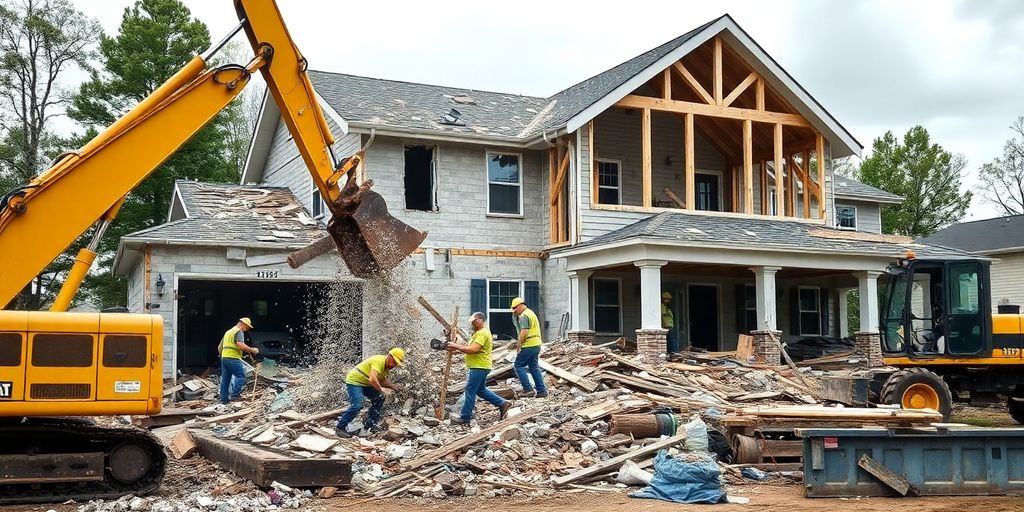
Safety Precautions During Demolition
Demolition isn’t just about swinging a sledgehammer; it’s a serious business that needs careful handling. Safety should be your number one priority. Before you start tearing things down, make sure you’ve got the right permits and safety gear. If you’re dealing with older homes, watch out for asbestos, lead paint, and other hazardous materials. It’s smart to hire professionals to handle these, as they know how to manage risks and keep everyone safe.
Rebuilding and Framing Techniques
Once the old stuff is out of the way, it’s time to start rebuilding. This is where your home starts taking shape again. Framing is key here – it’s like the skeleton of your house. You’ll need to decide on the layout, maybe knocking down a wall or two to open up space. Proper framing ensures your house is sturdy and ready for the next steps, like installing electrical and plumbing systems.
Managing Waste and Recycling
With all the debris from demolition, managing waste becomes crucial. Consider renting a dumpster to handle the mess. It’s not just about getting rid of stuff; think about recycling materials whenever possible. Metals, concrete, and even some woods can be recycled. This not only helps the environment but can also save on disposal costs.
Planning ahead for home remodeling in 2025 means securing permits, ordering materials early to avoid supply chain hiccups, and scheduling key phases like demolition and construction.
By keeping these points in mind, you can make the demolition and reconstruction phases as smooth as possible. It’s all about preparation and having a clear plan.
Upgrading Mechanical Systems for Modern Living

Plumbing and Electrical Overhauls
When it comes to modernizing your home, plumbing and electrical systems are a great starting point. Updating these systems ensures both safety and efficiency. For plumbing, consider swapping out old pipes for newer, more efficient ones. This can help improve water flow and reduce the risk of leaks. On the electrical side, make sure your wiring is up to date and can handle the demands of modern appliances. You might also want to add more outlets, especially if you’re integrating smart home tech.
Enhancing HVAC Systems
Your HVAC system is the heart of your home’s comfort. Upgrading to a more efficient system can not only make your home more comfortable but also save on energy costs. Consider systems that offer programmable thermostats or even smart home integration for better control. In 2025, many commercial heating and cooling systems will see stricter energy standards, which can also impact residential systems. Keeping your HVAC system updated ensures you’re not only comfortable but also compliant with any new regulations.
Integrating Smart Home Technologies
Smart home technologies are no longer just a luxury; they’re becoming a standard in modern living. From smart thermostats to automated lighting and security systems, integrating these technologies can significantly enhance your living experience. Automation can help you manage your energy use more efficiently and even increase the security of your home. Plus, with everything connected, controlling your home becomes as easy as tapping your smartphone. Consider prioritizing smart tech that aligns with your lifestyle and offers the most convenience.
Selecting Interior Finishes and Design Elements
Choosing Sustainable Materials
Picking sustainable materials is like choosing a healthy diet for your home. You want stuff that’s good for the planet and your wallet. Opt for reclaimed wood, which adds a unique charm and reduces waste. Bamboo is another great choice—it grows fast and is super durable. Recycled metal and glass can also give your space a modern edge while being eco-friendly. Sustainable choices can transform your home into a green sanctuary without sacrificing style.
Incorporating Modern Design Trends
Keeping up with modern design trends can be a fun way to refresh your home. Think about open spaces and minimalistic designs that create a sense of calm. Neutral colors are still in, but adding a splash of bold color can make a room pop. Consider smart technology integration, like automated lighting or voice-controlled systems, to make your home not just stylish but also smart.
Balancing Aesthetics and Functionality
It’s all about finding that sweet spot between looks and practicality. You want your home to be beautiful, sure, but it also needs to work for you. Start by considering how each room is used. A kitchen should be both a chef’s playground and a family gathering spot. Choose furniture that’s comfy yet stylish, and don’t forget about storage solutions that keep clutter at bay.
When planning your renovation, remember that Ruach Home Services offers comprehensive remodeling solutions that blend aesthetics with functionality, ensuring your home is both beautiful and practical.
In the end, your choices in finishes and design elements should reflect your personal style while meeting your daily needs. So go ahead, let your personality shine through every corner of your home.
Final Touches: Bringing Your Vision to Life
Decorative Elements and Personalization
The last steps in your home makeover are where your unique style truly comes alive. This is when you add those personal touches that turn a house into a home. Here’s how to make it happen:
- Furniture and Accessories: Choose pieces that not only fit your design but also add comfort. Think about adding rugs, curtains, and throw pillows to bring warmth and texture into the space.
- Art and Decor: Display art that speaks to your personality and interests. Use decor items like vases, sculptures, and plants to inject character and vitality into your rooms.
Landscaping and Outdoor Spaces
Don’t forget about your outdoor areas! They are just as important as the inside. Here’s a quick checklist to guide you:
- Garden Design: Plan a garden that suits your lifestyle, whether it’s a vegetable patch or a flower garden.
- Outdoor Furniture: Select durable furniture that can withstand the elements while providing comfort.
- Lighting: Proper lighting can transform your outdoor space for evening use, making it both functional and inviting.
Ensuring Long-Term Maintenance and Care
Once everything is in place, keeping it all looking great is key. Here’s how to ensure your home stays in top shape:
- Regular Cleaning: Establish a cleaning routine to maintain the freshness of your interior and exterior.
- Seasonal Maintenance: Address seasonal tasks like gutter cleaning and HVAC checks.
- Repairs: Tackle small repairs promptly to prevent them from becoming larger issues.
As you wrap up your home transformation, remember that these finishing touches are what make your space uniquely yours. It’s all about creating a setting where you feel comfortable and truly at home. And if you’re looking to start 2025 with a fresh vibe, consider transformative home remodeling resolutions that include inspiring kitchen and bathroom redesigns for a new beginning.
As you put the finishing touches on your project, remember that your dream home is just a click away! Visit our website to explore how we can help turn your ideas into reality. Let’s make your vision come to life together!
Wrapping Up Your Home Transformation Journey
So, there you have it! Taking on a home reconstruction project in 2025 might seem like a big task, but with the right planning and a bit of patience, it can be a rewarding experience. Whether you’re knocking down walls or just giving your space a fresh coat of paint, remember that every step you take is a step towards creating a home that truly reflects your style and needs. Don’t rush it; enjoy the process and learn as you go. After all, it’s not just about the final result, but also about the journey of turning your house into a home. So grab your tools, roll up your sleeves, and get started on making your dream space a reality!
Frequently Asked Questions
What is home reconstruction?
Home reconstruction is the process of tearing down parts or all of a house and rebuilding it. It can involve changing the layout, updating systems, and improving the overall look and function of a home.
Why do people reconstruct their homes?
People reconstruct their homes to make them more modern, fix problems, add space, or increase the value of their property. It can also make a home more comfortable and energy-efficient.
How do I start planning a home reconstruction project?
Start by setting clear goals and a budget. Decide what changes you want to make and hire professionals if needed. Make sure to get all the necessary permits and plan the project timeline carefully.
What should I consider when choosing materials?
Think about the durability, cost, and look of the materials. It’s also important to consider if they are eco-friendly and if they fit the style you want for your home.
How can I make sure my home reconstruction is safe?
Follow safety guidelines, especially during demolition. Hire licensed professionals who know how to handle hazardous materials like asbestos. Always wear protective gear and make sure the site is secure.
What are some common challenges in home reconstruction?
Common challenges include staying within budget, dealing with unexpected structural issues, and managing timelines. Good planning and communication with your team can help overcome these problems.